Have further questions?
About the Project
Protecting a Vulnerable Past: Preserving Local Archives in Bucha, Ukraine
Planning Grant
The project's objective is to prepare for the digitization and conduct test digitization of two critically endangered local archives in Bucha, an area profoundly affected by Russia's military aggression against Ukraine in 2022. These archives, namely the Bucha Adventist Historical Archive-Museum and the Makariv Archive, originated in Ukraine during the Soviet era, housing unparalleled collections spanning from the 17th to the 21st century. They offer unique insights into everyday life in Soviet Ukraine, albeit from distinct perspectives. The Makariv Archive presents a narrative of Soviet modernization in the village from the viewpoint of local Soviet authorities, while the Adventist Historical Archive-Museum documents dissident cultures, chronicling the story of the most active Soviet-era religious underground movement. Both archives suffered partial damage during the occupation and massacre in Bucha, 2022. This initiative focuses on the archives of local and minority communities, often serving as custodians of unique historical memories from one of the most complex periods in Ukraine's 20th-21st-centuries history. These archives contain records of Soviet-era political surveillance and persecutions, samizdat materials produced by dissent movements, state documents, photographs, folk art, artifacts, as well as records related to the Chernobyl catastrophe, the declaration of Ukraine’s independence, and expanding collections documenting the ongoing war in Ukraine, including photo-video materials, eyewitness accounts. This project aims to contribute to broader digitization efforts in Ukraine, conducted collaboratively with the State Archival Service Ukraine, the Archive of the Security Service of Ukraine, and British Library. The primary goal is to safeguard Ukraine's cultural heritage amid the ongoing war, ensuring that the insights into Ukraine's history are preserved and accessible for future generations.
-
Проєкт має на меті зберегти та зробити доступними громaдські архіви, що перебувають під загрозою втрати в Україні, зокрема Адвентистський архів у Бучі та Макарівський архів. Працюючи в регіоні, постраждалому від окупації 2022 року, ініціатива пріоритетно займалася негайним порятунком колекцій, пошкоджених обстрілами, пожежами та неналежним зберіганням, водночас зміцнюючи сталий інституційний потенціал. Основними завданнями були переміщення та стабілізація делікатних і пошкоджених матеріалів, створення оглядів колекцій та предметних інвентарів, проведення тестової цифровізації та закладання основ для довгострокової цифрової платформи. Проєкт також передбачав зміцнення місцевої експертизи через навчання команд на місцях каталогізації, цифровізації, створення метаданих та роботи з документами в умовах воєнного часу.
Попри величезні виклики, спричинені повітряними тривогами, перебоями з електропостачанням та загальною нестабільністю, проєкт досяг значних результатів. Колекції були врятовані, оцінені та організовані, а деякі рідкісні матеріали стали відслідковуваними та частково доступними для досліджень і подальшої цифровізації. Команда знаходила інноваційні рішення за обмежених ресурсів, створюючи майже професійні цифрові студії з імпровізованих матеріалів. Інституційні партнерства були зміцнені на національному та міжнародному рівні, зокрема з Галузевим державним архівом Служби безпеки України, International Council of Archives, Future for Religious Heritage Network та Канадським інститутом українських студій (University of Alberta). Ці досягнення закладають основу для довгострокового збереження, ширшого доступу та продовження відновлювальних робіт після війни для загрозливих для втрати архівів України.
Project Leads
Tatiana Vagramenko, University College Cork
Host Institution
University College Cork (Ireland)
More Information
The Value of Local Archives
These collections illuminate multiple facets of Ukrainian history: the tension between authority and belief, the lived experiences of ordinary people, the persistence of religious and cultural traditions under oppression, and the ongoing impact of war and occupation. The collections invite close attention and reflection, offering a window into lives shaped by resilience, creativity, and historical upheaval. Fragile yet powerful, they reveal stories of survival, perseverance, and the ways local communities navigated and recorded the dramatic transformations of their world.
Adventist Archive in Bucha
The Bucha Adventist Historical Archive-Museum is one of the richest collections of its kind in Ukraine – and potentially globally – documenting the underground religious culture in the Soviet Union. It also holds materials spanning the 17th to the 21st centuries, including samizdat publications, manuscripts, photographs, folk art, prophetic maps, correspondence, periodicals, books, audio recordings, and filmstrips. Personal items of GULAG prisoners and other religious artifacts reveal the lived experiences of believers whose faith was formally forbidden and persecuted. Visitors should appreciate this archive as a testament to resilience, creativity, and clandestine devotion in the face of systemic repression.
The Alekseev Collection
The collection includes equipment for the clandestine production of diafilms (filmstrips with still images) used in underground Adventist communities for clandestine religious education in the Soviet Union (1970s). The equipment was designed and produced by a film producer, Alekseev, who worked at the Studio Film in Kharkiv and secretly constructed diafilms for clandestine Adventist communities across the Soviet Union, using spare parts and scrap metal.
The project team organized these materials as well as over 600 drawings for filmstrips, some of which are included in the item-inventory.
The Art and Map Collection
The project team discovered remarkable items, including handcrafted prophetic maps and Biblical paintings, some created on fabric up to two meters long.
Archive Stories
- A handmade wooden suitcase crafted by an Adventist believer named Ivan. Originally sentenced to death in 1944, his sentence was later commuted to ten years in the GULAG. Ivan made this suitcase during his time in the labor camp. The suitcase was donated to the Adventist Archive-Museum in Bucha and inspired the archivist to begin collecting the personal belongings of other repressed believers. Over time, this collection grew, filled with unique objects and the stories they carried.
- We discovered a clandestinely produced filmstrip copier in a dusty box at the Adventist Archive in Bucha. Made in Kharkiv from spare parts and scrap metal, with some components covertly machined at a state-owned plant, it still works. The archivist demonstrated the process of producing filmstrips, showing the religious materials copied and explaining how these filmstrips were used in underground Bible study sessions and clandestine gatherings across the Soviet Union – a time when practicing religious faith was forbidden and believers faced sever persecution. We also examined a box containing films and sketches for filmstrips created by Anatolii Alekseev, a renowned Kharkiv artist and film producer, who had secretly been a Seventh-Day Adventist all his life, producing these materials for his church under the cover of his professional work.
Makariv Archive
The Makariv Archive, originating from the Makariv district of the Kyiv region, documents Soviet modernization and everyday life in rural Ukraine from the perspective of local authorities and institutions. Its holdings include rare photographs of Bucha, local newspapers (1945–2020), reports from kolkhozes during Stalin’s collectivization and the post-war era, WWII-era documents, local anti-religious propaganda, records on the Chernobyl catastrophe, and materials documenting Ukraine’s independence. The archive also preserves the first extensive collection on Russian aggression during the 2022 occupation of Bucha, including photos, videos, articles, and eyewitness accounts.
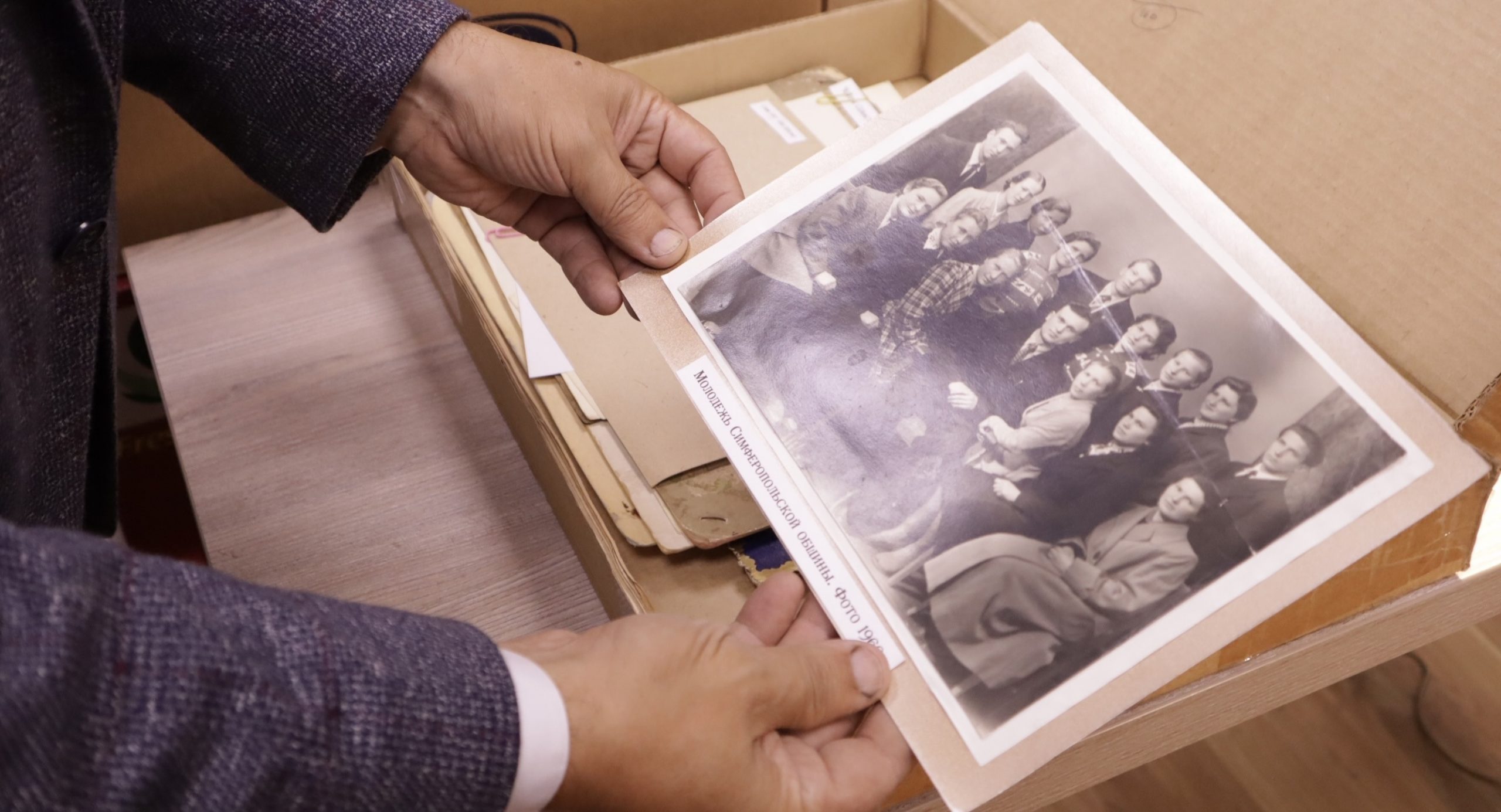
The archive had been damaged by shelling and fire, evacuated in 2022, and remained inaccessible. A key outcome of the project was the relocation of the collections back to the restored archive building. Once returned, the project team conducted an initial condition assessment of damaged documents, identified priority materials for conservation, and stabilized vulnerable items. In parallel, we began organizing the collections physically and intellectually, establishing a preliminary catalogue structure and basic inventory. Although many materials remain stored in non-archival containers, this work has made the collections traceable, assessable, and accessible for controlled on-site use for the first time since the war damage.