Have further questions?
About the Project
A Survey of Endangered Manuscript Libraries in the Jebel Nafusa, Libya
Planning Grant
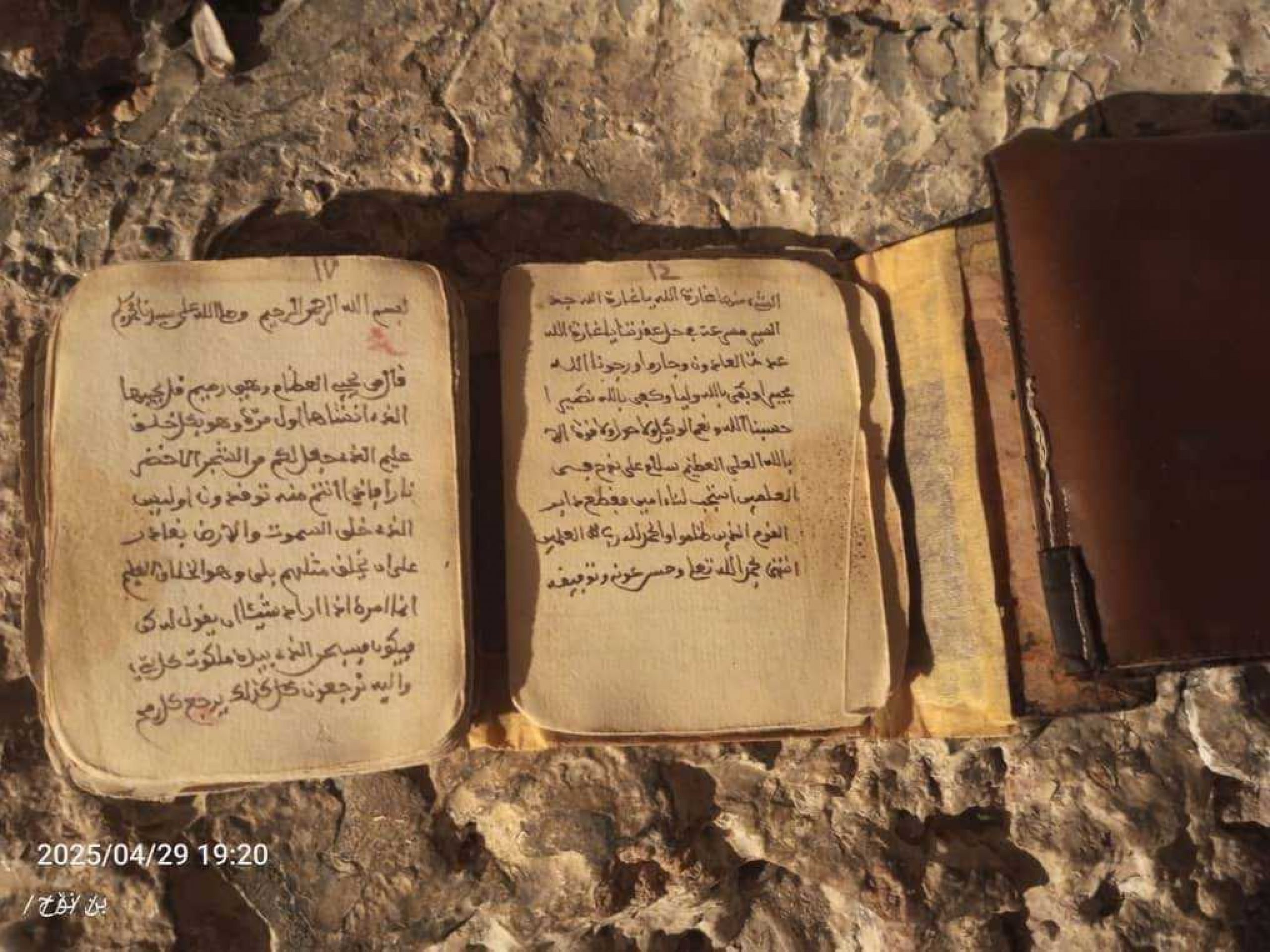
This project lays the groundwork for a regional initiative in documenting and digitizing private manuscript library collections in Jebel Nafusa, Libya. For centuries, this region of Libya has been home to a minority ethno-religious community of Ibadi Muslims, who are also primarily speakers of the region's Amazigh language. After decades of marginalization under the government of Mu'ammar al-Qaddafi (in office, 1969-2011), the region's communities are engaged in initiatives toward the valorizing of material heritage, especially architecture. This project focuses specifically on manuscripts in private collections, which carry tremendous value both for local communities as well as the international research community. Libraries in the Jebel contain a range of materials for local and regional histories, including local modern historical texts authored on families, tribes, and cities in the region as well as 20th century copies of older texts unique to the Ibadi community and which cannot be found outside the region. Documentation and, we hope, future digitization of these collections carries the potential to: (1) preserve these items for the benefit of both their owns and local communities, whose members are invested in their conservation but may lack the resources to do so; (2) bring to light sources for both Libyan and international researchers for understanding the history of this minority community, who otherwise remains unknown outside specialist circles.
Project Leads
Paul Love, Al Akhawayn University in Ifrane (AUI), Morocco
Ali Mazawi, “The Libraries of Nafusa” project in Libya
Soufien Mestaoui
Host Institution
Ibadica (France)
More Information
Archival collections in the region are small and require contextualization to understand their histories. Recognizing the interrelations among collections and manuscripts is important for understanding how they fit into a larger tapestry of manuscript culture in the region. The project team was able to document two collections, but an entire generation of scholars from the Jebel Nafusa region lived through the same turbulent decades, persevering as they encountered major political shifts. As such, these manuscripts are part of a fragmented history as manuscripts have been relocated over time, dispersed into smaller collections, or confiscated and lost.
Library of Shaykh Amhammad Ali al-Tandimirti
The collection dates to the 1920s and was owned by a prominent teacher and scholar from the Jebel Nafusa region. The contents of the collection are a mixture of lithograph printed books, personal documents, and moveable type printed books in Arabic.
The Library of Shaykh Amhammad Ali al-Tandimirti represents so much of the region’s turbulent history and the community’s resilience in the face of uncertainty. Shaykh Amhammad lived through the colonial period, the Kingdom of Libya, and the volatile years of the Qaddafi government. His collection, much of which was likely confiscated by the Qaddafi government after he was targeted and arrested, offers a window into the life of a prominent community figure and his intellectual pursuits.
Read the Collection Survey(opens in a new tab)
Library of Muhammad Ahmad Ali al-Tandinmirti
The collection dates to the 1960s and was owned by a Muhammad Ahmad Ali al-Tandinmirti originally from the Jebel Nafusa region but resident in Tripoli. The contents of the collection comprise movable type printed books in Arabic, some of which date to earlier in the 20th century and others that date to the initial transition from lithograph to moveable type print.